
Zero-Based Budgeting: Rethink Spending When Times Are Tough

Economic uncertainty has a way of exposing the cracks in traditional business operations. While most companies respond to tough times by making across-the-board cuts or freezing spending, the smartest organizations use downturns as opportunities to fundamentally rethink their approach to financial management. That’s where zero-based budgeting (ZBB) becomes a game-changer.
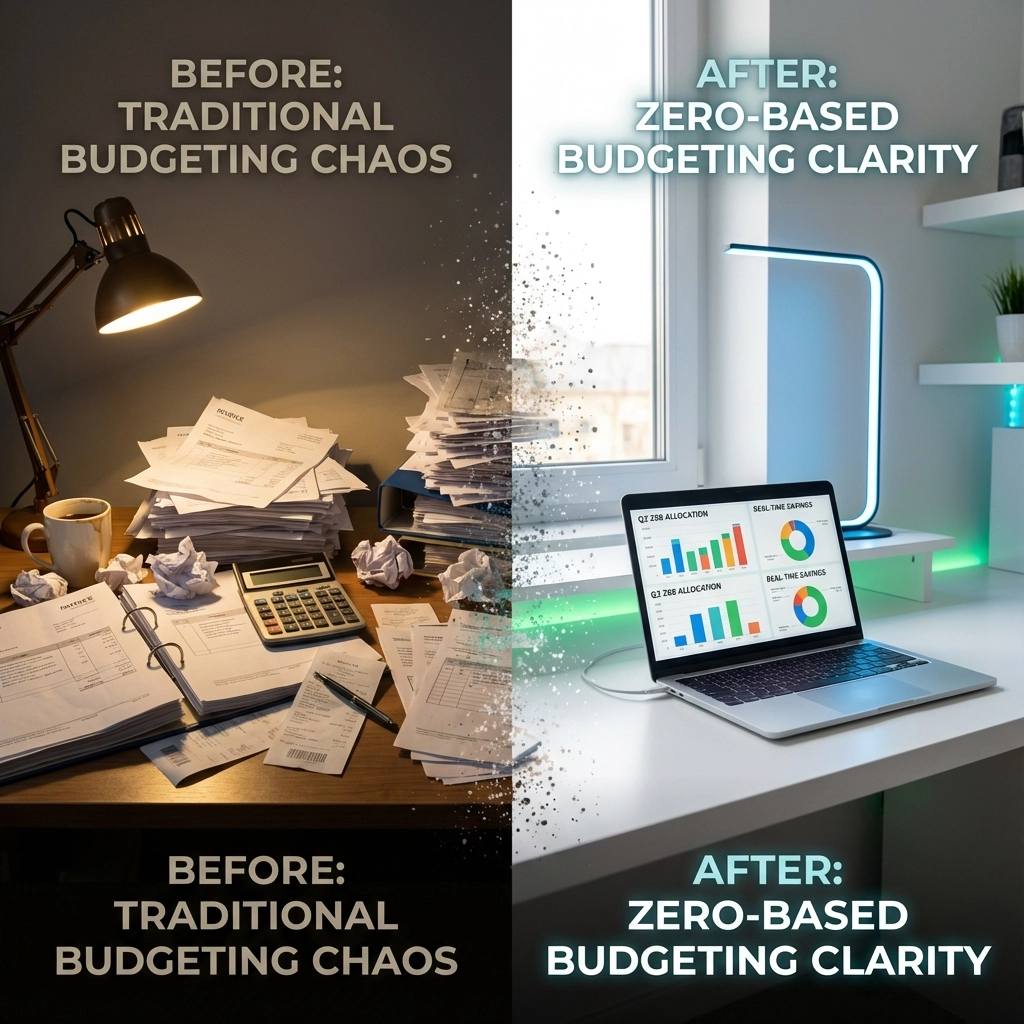
Unlike traditional budgeting methods that simply adjust last year’s numbers, zero-based budgeting forces every department to start from scratch and justify every single expense. It’s not just about cutting costs: it’s about building a more resilient, strategically aligned organization that can thrive regardless of economic conditions.
What Makes Zero-Based Budgeting Different
Traditional budgeting takes the easy route. Finance teams look at last year’s budget, make incremental adjustments based on inflation or growth projections, and call it done. The problem? This approach perpetuates inefficiencies and funds outdated initiatives that may no longer serve the business.
Zero-based budgeting flips this process entirely. Every budget cycle begins with a clean slate, literally starting from zero. Each department must rebuild their budget from the ground up, providing detailed justification for every expense, every position, and every program. Nothing gets funded automatically based on historical precedent.
This methodology was pioneered in the 1970s by Pete Pyhrr and has been successfully implemented by companies ranging from Fortune 500 corporations to mid-market businesses. The core principle remains the same: if you can’t justify why you’re spending money on something, you shouldn’t be spending it at all.

The Four-Step ZBB Process That Drives Results
Step 1: Reset to Zero
Every departmental budget returns to zero dollars. No assumptions, no carryovers, no “that’s how we’ve always done it.” This psychological reset is crucial because it forces managers to think critically about their true needs rather than defend existing spending patterns.
Step 2: Justify Every Expense
Department heads must provide detailed documentation for each proposed expenditure. This isn’t a superficial exercise: it requires demonstrating clear linkage between costs and business outcomes. Software licenses, office supplies, marketing campaigns, personnel costs: everything needs a business case.
Step 3: Strategic Alignment Review
Leadership evaluates each budget request against current strategic priorities. A department might perfectly justify an expense, but if it doesn’t advance key business objectives, it won’t receive funding. This ensures resources flow to activities that drive measurable results.
Step 4: Resource Allocation Based on Value
Rather than spreading resources evenly or following historical patterns, funding flows to the highest-impact opportunities. High-performing departments with clear growth plans may receive increased budgets, while underperforming areas see reduced allocations.
Why ZBB Transforms Business Resilience During Downturns
When economic pressures mount, zero-based budgeting provides distinct advantages over traditional cost-cutting approaches:
Surgical Precision Instead of Blunt Instruments
Most companies respond to financial pressure with percentage-based cuts across all departments. This approach inevitably damages high-performing areas while protecting underperforming ones simply because they’ve always existed. ZBB enables surgical precision: eliminating truly wasteful spending while protecting and even increasing investment in strategic priorities.
Uncovering Hidden Inefficiencies
The detailed justification process reveals spending patterns that have become invisible over time. Companies regularly discover they’re paying for software nobody uses, maintaining facilities that serve no purpose, or funding marketing programs that generate no measurable return. These inefficiencies often represent significant savings opportunities.
Cultural Shift Toward Accountability
ZBB creates a culture where spending decisions are made consciously rather than by default. Managers become more thoughtful about resource requests because they know they’ll need to defend every dollar. This cultural change often persists beyond the budgeting cycle, creating lasting improvements in financial discipline.
Strategic Agility
Traditional budgeting locks companies into spending patterns established months earlier. ZBB creates flexibility to redirect resources quickly as market conditions change. If a new opportunity emerges or an existing initiative proves unsuccessful, the organization can reallocate funds without being constrained by historical commitments.
Real-World Impact: How Companies Win with ZBB
Consider the manufacturing company facing supply chain disruptions and rising material costs. Rather than making across-the-board cuts, they implemented zero-based budgeting and discovered they were maintaining three separate quality control systems that largely duplicated each other’s functions. By consolidating to one comprehensive system, they reduced costs by 40% while actually improving quality metrics.
Or the professional services firm that used ZBB to evaluate their technology stack during a revenue downturn. The process revealed they were paying for 23 different software platforms, many serving similar functions. After rationalization, they cut technology costs by 35% while improving user experience through better integration.
The retail chain that discovered through ZBB analysis that their most expensive marketing channels were generating the lowest return on investment. By redirecting those budgets to higher-performing channels, they increased sales by 22% while reducing marketing spend by 15%.
These aren’t isolated success stories: they represent the systematic benefits that emerge when organizations take a disciplined approach to resource allocation.
Overcoming ZBB Implementation Challenges
Zero-based budgeting isn’t without challenges. The process requires significant time investment upfront and can create resistance from managers accustomed to automatic budget renewals. Some organizations struggle with the detailed analysis required or lack the systems to track spending at the granular level ZBB demands.
However, these challenges are surmountable with proper planning and expert guidance. The key is implementing ZBB systematically, with clear communication about objectives and adequate support for managers navigating the new process.
Many companies also benefit from phased implementation: starting with specific departments or cost categories rather than attempting organization-wide transformation immediately. This approach allows teams to build competency and confidence before expanding the methodology.

Where RampUp Growth Advisors Makes the Difference
Implementing zero-based budgeting effectively requires more than good intentions: it demands expertise in change management, financial analysis, and strategic planning. That’s where RampUp Growth Advisors provides critical value.
Our team has guided dozens of organizations through successful ZBB implementations, from initial assessment through full deployment and ongoing optimization. We understand that every business has unique challenges and requirements, so our approach is always customized to fit your specific situation.
We begin with comprehensive analysis of your current budgeting processes and spending patterns to identify the highest-impact opportunities. Our consultants work alongside your finance team to design ZBB frameworks that align with your strategic objectives while remaining practical for daily operations.
Throughout implementation, we provide training and support to ensure your managers understand not just the mechanics of ZBB, but the strategic thinking behind effective resource allocation decisions. This knowledge transfer ensures the benefits persist long after our engagement concludes.
Perhaps most importantly, we help organizations maintain momentum during the challenging transition period. ZBB implementation can feel overwhelming, but our experienced consultants keep projects on track while minimizing disruption to daily operations.
The Strategic Imperative for 2026
Economic uncertainty isn’t going away. Inflation pressures, supply chain volatility, and evolving market conditions mean businesses need financial management approaches that can adapt quickly and allocate resources strategically.
Zero-based budgeting isn’t just a cost-cutting tool: it’s a competitive advantage. Organizations that master ZBB build financial discipline that serves them well in both challenging and prosperous times. They become more agile, more strategic, and ultimately more resilient.
The question isn’t whether your business can afford to implement zero-based budgeting. It’s whether you can afford not to. In an environment where every dollar counts, shouldn’t you be making every spending decision with clear strategic intent?
Ready to transform your budgeting process and build lasting financial resilience? Contact our team to discuss how zero-based budgeting can strengthen your organization’s financial foundation and competitive position.